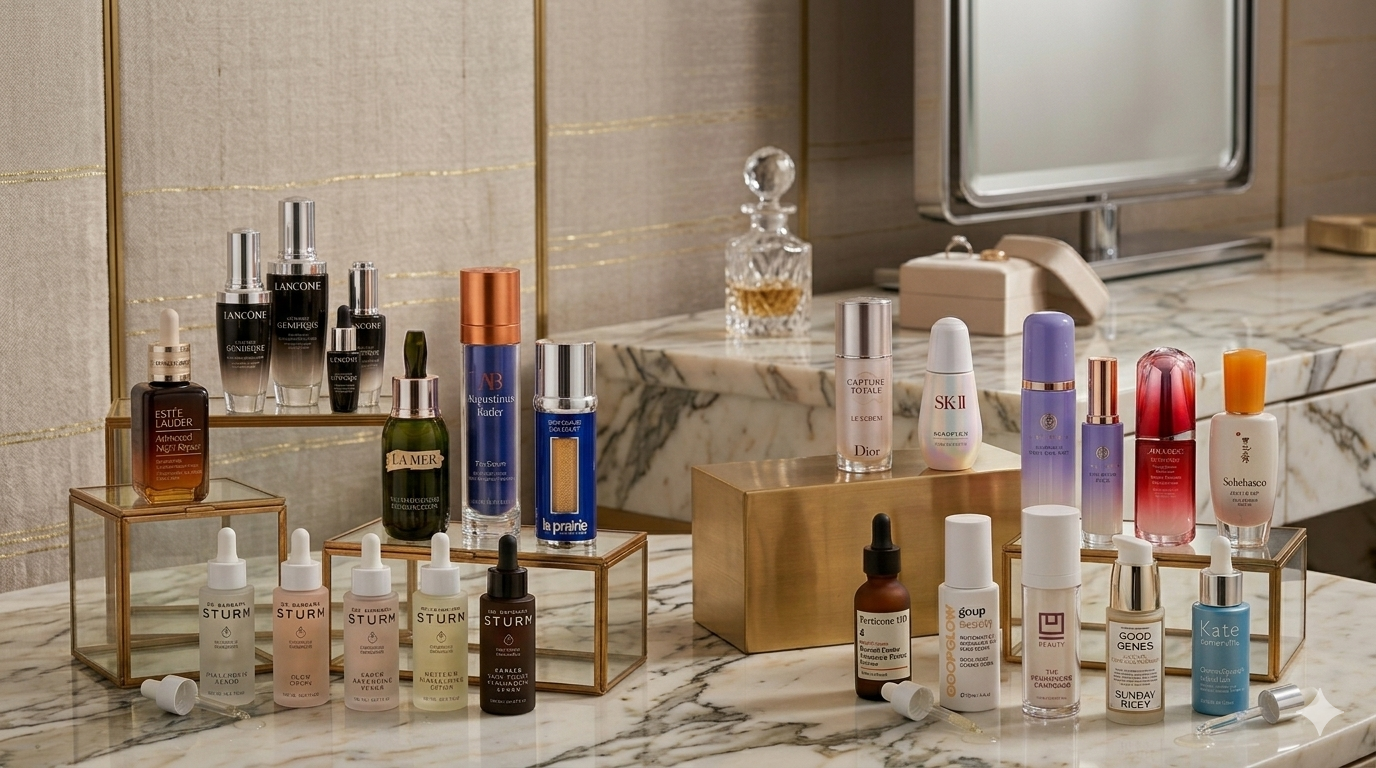
Company’s review of 25 leading prestige serums raises questions about value, ingredient transparency, and what consumers are paying for in modern skincare.
RALEIGH, NC, UNITED STATES, June 22, 2026 /EINPresswire.com/ — A review conducted by plant-based skincare company OM Botanical has found that many of America’s leading prestige face serums share remarkably similar formulation characteristics despite retail prices that range from approximately $80 to more than $1,500 per bottle.
The company’s review examined ingredient labels on packaging, publicly available product information, and pricing data from 25 widely recognized prestige serums sold in the United States.
Among the findings:
The average retail price was approximately $245 per bottle.
The median price was approximately $160 per bottle.
Nearly nine out of ten products reviewed listed water as the first ingredient.
Approximately three out of four appeared to contain synthetic phenoxyethanol as part of their preservation systems.
None of the products reviewed appeared to be formulated entirely from naturally derived ingredients.
Most products relied on similar categories of ingredients, including humectants, antioxidants, peptides, vitamins, ferments, botanical extracts, and various delivery and stabilization systems.
The findings arrive as the prestige skincare market continues to grow. Industry reports estimate U.S. prestige skincare sales have reached approximately $9.7 billion while consumers increasingly seek products that promise hydration, brightening, anti-aging benefits, and healthier-looking skin. At the same time, consumers are becoming more ingredient-conscious and increasingly question whether higher prices necessarily translate into better formulations or better outcomes.
“We’re seeing the emergence of what might be called skincare inflation,” says OM Botanical. “The average consumer today is more educated than ever. They are comparing ingredient lists, reading reviews, using ingredient-scanning applications, and asking deeper questions about formulation quality and value.”
The Price of Prestige
Face serums have become one of the beauty industry’s most premium categories.
Products containing ingredients such as vitamin C, hyaluronic acid, peptides, niacinamide, and fermented ingredients routinely command prices exceeding $100 and, in some cases, several hundred dollars per bottle.
Yet industry observers increasingly note that many of these same ingredient categories are now widely available across multiple price tiers. Consumers are asking whether premium prices primarily reflect formulation innovation, clinical substantiation, luxury packaging, exclusivity, marketing and celebrity endorsement, or some combination of all of these factors.
Recent beauty reporting has highlighted a growing willingness among consumers and beauty editors to consider lower-priced products containing similar categories of ingredients and barrier-support technologies.
Water: The Most Common First Ingredient
One of the review’s more surprising findings was the prevalence of water as the first-listed ingredient.
In cosmetic ingredient labeling, ingredients are generally listed in descending order of concentration until approximately one percent concentration.
The review found that approximately 88% to 92% of products examined listed water as the first ingredient.
Water is mainly a filler ingredient, although it also serves as an excellent solvent in skincare formulation.
However, OM Botanical believes the finding may surprise consumers who assume that premium pricing automatically reflects unusually concentrated formulations or exotic ingredients.
“The point isn’t that water is bad,” says OM Botanical. “The point is transparency. Consumers deserve to understand what they are paying for, what is in their products and why.”
The Rise of Ingredient Literacy
Industry experts increasingly describe today’s beauty consumers as highly engaged and increasingly knowledgeable.
Ingredient-forward products dominate online searches.
Consumers regularly discuss peptides, ceramides, ferments, microbiome support, niacinamide, vitamin C, hyaluronic acid, and barrier repair.
Many now scrutinize ingredient labels with the same curiosity they apply to nutrition labels.
This shift is reshaping the industry.
Price alone no longer automatically signals value.
Consumers increasingly want evidence, explanation, and transparency.
The Skin Barrier and the Microbiome Conversation
Scientific understanding of skin health has evolved considerably.
Researchers increasingly emphasize maintaining the skin barrier, supporting hydration, minimizing unnecessary irritation, and understanding the role of the skin microbiome in overall skin function.
As awareness of these concepts grows, consumers are showing increased interest in formulations that work with the skin’s natural biology rather than simply layering more ingredients into increasingly complicated routines.
Some consumers are moving toward more streamlined regimens centered around barrier support and long-term skin resilience rather than chasing a constant stream of trending ingredients.
A Different Approach to Premium Formulation
According to OM Botanical, growing consumer interest in transparency is encouraging companies to rethink what constitutes luxury in skincare.
The company formulates its biome-balancing serums using a different philosophy.
Rather than using water as the first ingredient, OM Botanical’s serums are formulated with skin rejuvenating organic aloe vera juice as the first ingredient, free of synthetic preservatives like phenoxyethanol and are made entirely with plant-based ingredients selected to support the skin barrier and microbiome.
The formulations incorporate botanical antioxidants, fermented ingredients, cold-pressed oils, and plant-derived actives designed to work with the skin’s natural functions while emphasizing ingredient transparency and formulation simplicity.
The company believes that premium skincare may increasingly be defined not solely by price, packaging, or exclusivity, but by thoughtful formulation decisions, scientific rationale, and consumer trust. Redefining Value in Beauty
The review’s findings raise a broader question that is increasingly being asked throughout the industry:
What exactly are consumers paying for when a serum costs $150, $300, or even $1,500?
There is no single answer.
Some products incorporate proprietary ingredients, or extensive clinical testing.
Others derive value from brand heritage, sensory experience, exclusivity, packaging, celebrity endorsement and marketing investments.
But according to OM Botanical, one thing is becoming increasingly clear:
Consumers are becoming more sophisticated. They want transparency. They want evidence.
And increasingly, they want to understand not only what products cost, but why.
“The future of premium beauty may belong to brands that can clearly explain their ingredients, their formulation philosophy, and the value they bring,” says OM Botanical. “As ingredient literacy grows, consumers are asking smarter questions. That’s good for the industry and ultimately good for consumers.”
About the Review
The OM Botanical Prestige Serum Review analyzed publicly available data, ingredient labels, formulation information, and pricing data from 25 widely recognized prestige face serums sold in the United States. Findings represent observations based on publicly available product information and were intended to examine formulation trends and ingredient transparency within the prestige serum category.
About OM Botanical
OM Botanical is a plant-based skincare and hair care company based in Apex, North Carolina. The company formulates microbiome-conscious products using botanical ingredients, Ayurvedic herbs, fermented ingredients, cold-pressed oils, and naturally derived components selected to support healthy skin and ingredient transparency. For more information visit https://ombotanical.com
Sudhir Shah
OM Botanical
+ +1 919-629-8389
email us here
Visit us on social media:
LinkedIn
Instagram
Facebook
YouTube
TikTok
X
Other
Legal Disclaimer:
EIN Presswire provides this news content “as is” without warranty of any kind. We do not accept any responsibility or liability
for the accuracy, content, images, videos, licenses, completeness, legality, or reliability of the information contained in this
article. If you have any complaints or copyright issues related to this article, kindly contact the author above.

Media gallery