
Spokane Valley, WA – September 09, 2026 – PRESSADVANTAGE –
Washington Auto Collision has published new consumer guidance explaining how damage concealed behind exterior vehicle components may be documented during collision repair planning. The September update adds information about three areas not previously addressed together in the company’s consumer resources: when concealed areas become accessible, how newly identified conditions are documented, and how those findings can affect an existing repair plan.
The publication expands Washington Auto Collision’s existing collision repair information with a focused explanation of what consumers commonly encounter when an initial vehicle evaluation is followed by repair-related disassembly.
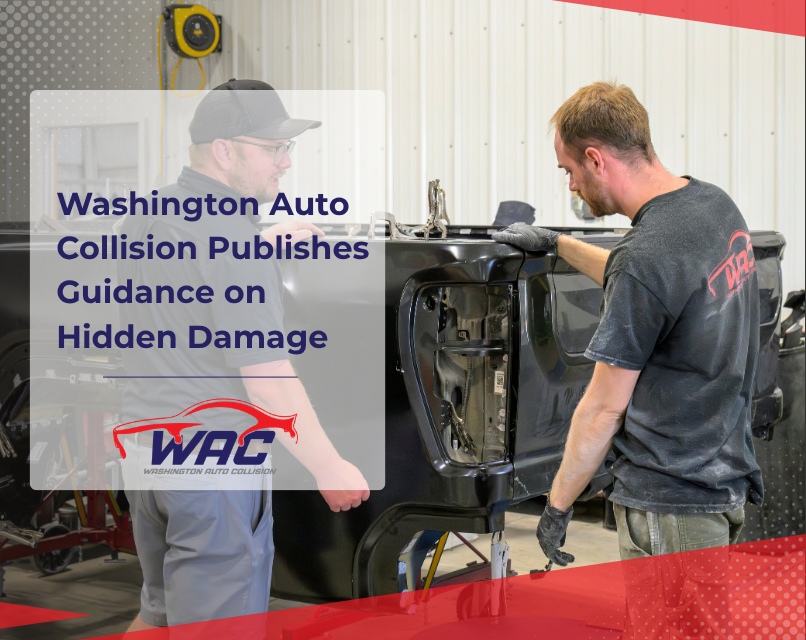
Exterior damage involving a bumper, fender, door, hood, quarter panel, liftgate, lamp, or trim component can provide an initial indication of the area affected by a collision. However, some components can restrict access to brackets, mounting points, reinforcements, absorbers, wiring, fasteners, and adjacent parts.
The September guidance explains that when removal of an affected exterior component is appropriate to the repair process, technicians can evaluate areas that were not accessible during the initial exterior inspection.
This distinction is the central focus of the newly published material.
Washington Auto Collision emphasizes that concealed damage is not assumed simply because a collision occurred. Instead, additional repair needs are based on conditions actually identified as the vehicle is evaluated and the repair plan develops.
A bumper assembly provides one example. The exterior cover may show a scrape, crack, deformation, or displacement while components positioned behind the cover remain unavailable for complete evaluation from the exterior. If the repair process provides access to those areas, their condition can then be documented.
The same principle can apply to lamps, trim, exterior panels, liners, and other components that restrict visibility of adjoining parts.
The new resource separates this process into three stages: initial documentation, access and evaluation, and repair-plan updates.
During initial documentation, technicians record visible collision conditions and relevant vehicle information. The purpose is to establish what can reasonably be observed at that stage rather than predict conditions that have not been confirmed.
During the second stage, areas exposed through applicable repair-related disassembly can be evaluated. Any additional collision-related conditions that are identified can then be documented.
The third stage addresses how verified findings are incorporated into repair planning. A newly documented condition does not automatically determine a specific repair method. The affected component, its condition, construction, location, and applicable manufacturer information remain relevant to determining the appropriate procedure.
Washington Auto Collision provides additional information about vehicle-specific repair planning through its collision repair resource.
The September guidance also addresses why repair information can change after an initial estimate or inspection. An initial assessment reflects information reasonably available at that point in the process. Additional access can provide information that was not previously observable.
Documenting those findings allows the repair plan to reflect the vehicle’s condition as more information becomes available.
Vehicle construction can influence this process. Contemporary vehicles may incorporate different grades of steel, aluminum, plastics, composites, adhesives, electronic components, and other materials. Manufacturer repair information can provide procedures relevant to component removal, repairability, replacement, attachment methods, measurements, joining techniques, and corrosion protection.
The guidance also identifies vehicle technology as a consideration when concealed areas contain electronic equipment.
Cameras, radar units, parking sensors, wiring, and related components may be located within or near bumpers and other exterior areas. Their presence alone does not establish that a particular diagnostic or calibration procedure is necessary. Applicable requirements depend on the individual vehicle, documented conditions, operations performed, and relevant manufacturer information.
Additional information about these systems is available through Washington Auto Collision’s ADAS calibration resource.
The September publication was developed to address a specific consumer-information gap between the initial inspection and the finalized repair plan. Vehicle owners may receive an initial assessment before every affected area is accessible, while later documentation can reflect conditions identified as the repair process progresses.
By separating initial observations from later documented findings, the resource gives consumers a clearer framework for understanding why repair information can be updated without suggesting that every collision produces hidden damage.
The guidance also distinguishes identifying additional damage from deciding how that damage should be repaired. Repair or replacement decisions remain dependent on the individual component, documented condition, material, accessibility, and applicable technical information.
Washington Auto Collision’s new guidance is intended as consumer education rather than a diagnostic or industry standard. Its purpose is to explain how information about previously inaccessible collision-damaged areas can become part of a vehicle-specific repair plan.
The September guidance is available through Washington Auto Collision’s collision repair resource. Related information about body repair is available through the company’s auto body repair resource.
Additional facility information is available through the Washington Auto Collision Spokane Valley location.
About Washington Auto Collision
Washington Auto Collision serves Spokane Valley and surrounding communities with collision repair and related vehicle repair services. The company provides collision repair, auto body repair, ADAS calibration, repair planning, refinishing, and related vehicle restoration services.
###
For more information about Washington Auto Collision, contact the company here:
Washington Auto Collision
Gary Tolerico
(509) 927-0048
info@waciwa.com
16811 E Sprague Ave, Spokane Valley, WA 99037


