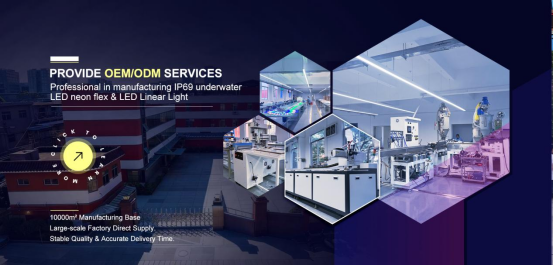
SHENZHEN, GUANGDONG, CHINA, April 14, 2026 /EINPresswire.com/ — The global illumination landscape is undergoing a profound transformation, driven by the dual imperatives of energy efficiency and human-centric design. As the Hong Kong International Lighting Fair approaches, industry professionals are looking toward innovative hubs to define the next generation of architectural lighting. Central to this evolution is the role of a specialized China LED Ceiling Panel Light Manufacturer, a sector that has moved beyond basic utility to provide sophisticated, integrated lighting systems. Shenzhen Best Linear Technology Co.,Ltd. stands at the intersection of this shift, blending rigorous R&D with high-tech production to meet the rigorous demands of modern engineering projects. By analyzing current market trajectories, it becomes evident that the focus is transitioning from simple brightness to the quality of light—specifically how linear and panel solutions can enhance well-being in commercial and residential spaces.
The synergy between architectural aesthetics and functional performance is more critical than ever. In the current market, “linear” is no longer just a shape; it is a design philosophy that emphasizes clean lines and seamless integration. For companies navigating this space, the challenge lies in maintaining high protection standards, such as IP69 ratings, while ensuring the light output remains soft and visually comfortable. This requires a deep understanding of material science, particularly in the development of flexible wall-washers and neon flex series that can withstand diverse environmental conditions without compromising on the CRI (Color Rendering Index) or thermal management.
Technological Integration in Modern Production
Operating from a specialized LED Ceiling Panel Light factory, the production process now incorporates advanced automation and precision testing to ensure every unit meets international safety and performance standards. The shift toward “Smart Lighting” has necessitated that manufacturing facilities integrate IoT-compatible drivers and dimming technologies directly into the hardware. Best Linear Technology has responded to this by focusing on an integrated business model that spans from initial R&D to final customization. This approach allows for a “tailor-made” service, where lighting fixtures are not just off-the-shelf products but engineered components designed for specific spatial requirements.
In the context of the Hong Kong International Lighting Fair, the emphasis is increasingly on sustainability. High-efficiency LEDs that offer more lumens per watt while reducing carbon footprints are the primary interest for global distributors. This trend is particularly relevant for industrial and outdoor applications where durability is paramount. Products like IP69 flexible strip lights represent the pinnacle of this durability, offering resistance to high-pressure water jets and dust ingress, making them suitable for the most demanding engineering environments, from food processing plants to coastal architectural accents.
Versatility Across Application Scenarios
The application of linear lighting has expanded far beyond office corridors. Today, customized engineering lighting fixtures are being deployed in luxury hospitality, retail branding, and large-scale public infrastructure. The flexibility of neon flex and wall-washer series allows architects to treat light as a structural element, outlining the contours of buildings or creating immersive interior atmospheres. By focusing on the integrated R&D of these products, manufacturers can ensure that the light distribution is uniform, avoiding the common pitfalls of “spotting” or inconsistent color temperatures across long runs.
Case studies from recent global projects highlight a growing preference for modularity. Clients are no longer looking for a one-size-fits-all solution; they require systems that can be adjusted in length, brightness, and mounting style. This demand for customization is where the core strength of a high-tech lighting enterprise is tested. Whether it is a large-scale commercial mall requiring consistent ceiling panels or a bespoke art installation needing intricate linear accents, the ability to pivot production to meet specific engineering blueprints is a significant competitive advantage in the international market.
Design Trends: Human-Centric and Aesthetic Harmony
As we look at the trends emerging for the coming seasons, human-centric lighting (HCL) is at the forefront. This involves creating lighting environments that mimic the natural rhythm of daylight, supporting the circadian rhythms of occupants. For a manufacturer, this means developing LED panels and linear lights with tunable white technology. The goal is to improve productivity in workplaces and foster relaxation in residential settings. The technical complexity behind these features involves sophisticated control systems and high-quality LED chips that can maintain color consistency across the entire tuning range.
Furthermore, the aesthetic trend is moving toward “invisible” lighting. This is where the fixture itself is hidden, and only the effect of the light is visible. Flexible wall-washers are instrumental in achieving this, as they can be tucked into small coves to provide a broad, even wash of light across vertical surfaces. This minimizes glare and creates a sense of spaciousness, a key requirement for modern minimalist architecture. The integration of these fixtures into the very fabric of a building requires close collaboration between the manufacturer and the engineering teams during the early stages of design.
Reliability and Engineering Excellence
The global supply chain for lighting components is complex, making the reliability of the source factory a primary concern for international buyers. A commitment to quality control—ranging from the raw PCB assembly to the final encapsulation of waterproof strips—is what separates standard products from engineering-grade solutions. High-tech enterprises in Shenzhen have set a benchmark by adopting rigorous aging tests and environmental simulations. This ensures that when a product is installed in a remote engineering project, it performs consistently over its rated lifespan, reducing maintenance costs and total cost of ownership for the end-user.
As urbanization continues to accelerate globally, the demand for robust, energy-efficient, and aesthetically pleasing lighting will only grow. The role of specialized manufacturers is to bridge the gap between visionary architectural concepts and the practical realities of electrical engineering. By maintaining a focus on specialized product portfolios like linear lights and customized fixtures, companies can provide the tools necessary for designers to transform spaces.
The evolution of the lighting industry is defined by the move toward greater precision, higher protection levels, and a deeper integration with the built environment. From the development of flexible, high-protection strips to the mass production of sophisticated ceiling panels, the focus remains on delivering value through technical innovation and reliable manufacturing. As professional visitors and industry leaders gather at major international exhibitions, the spotlight remains on those who can combine the efficiency of a factory with the creativity of a design studio. The future of architectural illumination lies in this balance, ensuring that every space is not just lit, but truly enhanced by the science of light.
For more information on high-performance linear lighting and customized engineering solutions, visit: https://www.best-linear.com/
Shenzhen Best Linear Technology Co., Ltd.
Shenzhen Best Linear Technology Co., Ltd.
+ +86 18620586540
sales@best-linear.com
Legal Disclaimer:
EIN Presswire provides this news content “as is” without warranty of any kind. We do not accept any responsibility or liability
for the accuracy, content, images, videos, licenses, completeness, legality, or reliability of the information contained in this
article. If you have any complaints or copyright issues related to this article, kindly contact the author above.

Media gallery