Originally Posted On: https://www.ucanpack.com/blog/post/7-reasons-pizza-boxes-matter-more-when-order-volumes-hit-500
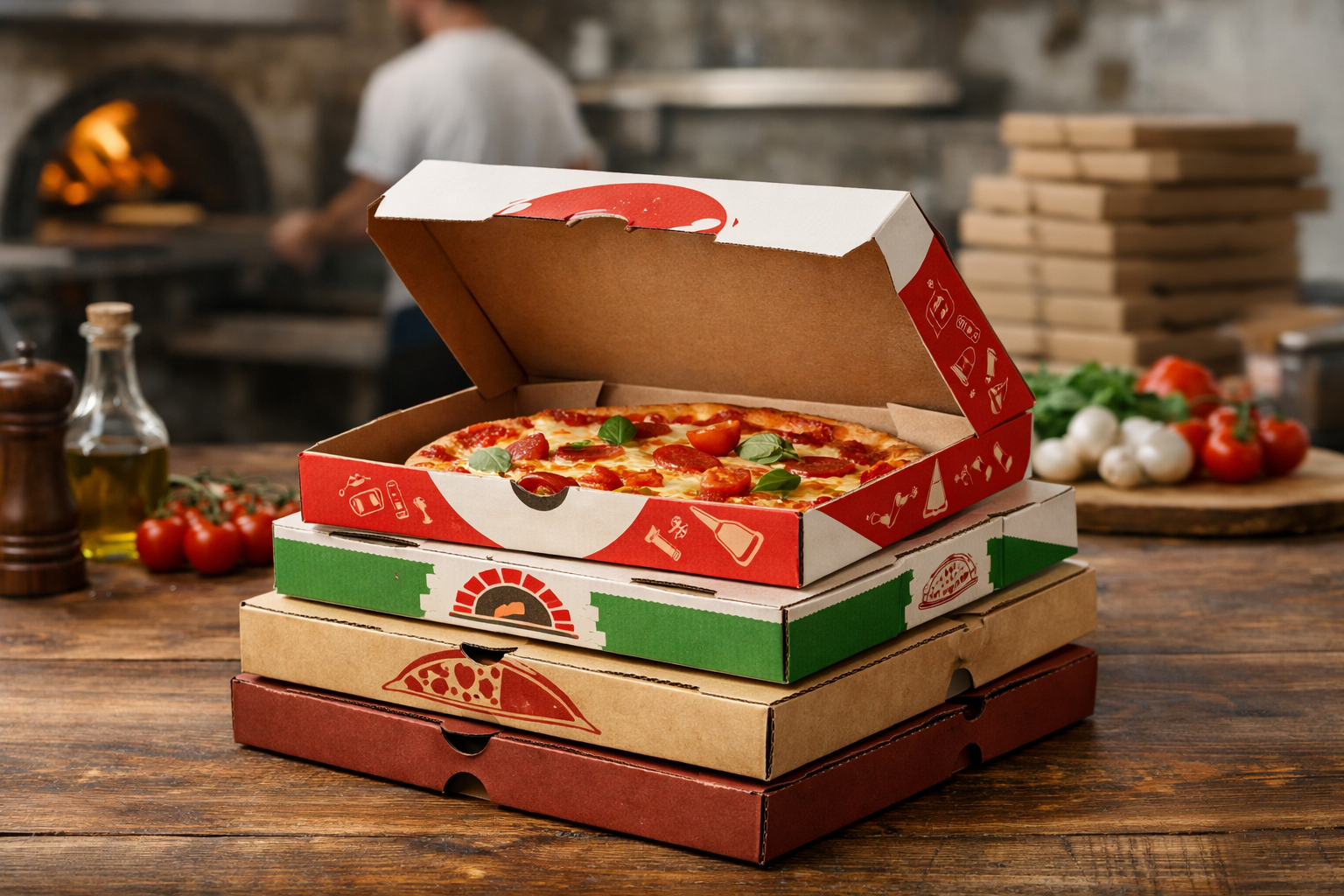
Key Takeaways
- Recheck pizza boxes at the 500-order mark: a small miss in corrugation, grease resistance, or stackability can turn into refunds, remakes, and bad reviews fast.
- Match pizza box style to the food, not the marketing name — deep-dish, slice, frozen, and thin-crust all need different inch sizes and board strength.
- Compare pizza box deals by landed cost, not unit price alone; freight, case count, and storage space can erase the savings on a cheap bulk order.
- Specify B-flute or E-flute based on heat, moisture, and transport time, because the wrong board can sag in delivery or crush in a stacked run.
- Build a size matrix before buying pizza boxes in bulk: personal, 10-inch, 12-inch, and large chain formats each need a clear spec sheet.
- Check how restaurant delivery timing affects packaging, because the 2-hour rule, venting, and grease control can make or break the customer experience.
500 orders is where the easy math stops working. At that point, pizza boxes aren’t just cardboard; they’re part of the service line, the damage claim buffer, and the thing that decides whether a pie shows up looking fresh or mashed flat under a stack of wings and salads. One bad case run can turn into 30 soggy lids, a few crushed corners, and a manager explaining refunds before the rush even ends.
The issue gets sharper because not every pizza travels the same way. A thin-crust cheese pie, a deep dish, and a frozen take-and-bake all ask for different board strength, different venting, and a different box style — even if the menu prints the same inch count. And once a restaurant starts filling delivery bags every hour, stackability stops being a nice extra. It becomes the difference between a clean pickup shelf and a pile of crushed cartons that nobody wants to touch.
Here’s the blunt part: cheap boxes can cost more than good ones once the volume climbs. Not in theory. In remakes, complaints, and wasted food. That’s why buyers who already know their chains, their deals, and their menu mix start paying closer attention to corrugation, grease resistance, and the way a box holds shape after 20 minutes in a hot car.
Why pizza boxes stop being a simple supply choice once delivery volume climbs
At 500 orders, does the box still feel like a box?
Not really. It starts acting like a control point for heat loss, crush resistance, and customer complaints — and if the board flexes, the slice sags, or grease cuts through, the refund shows up fast.
The break point at 500 orders: where a weak box starts showing up in refunds, remakes, and bad reviews
One cracked stack at rush hour can snowball into 12 late tickets, cold pizza, and a shift lead explaining why the delivery run went sideways. Restaurants that move enough volume need corrugated pizza boxes with the right flute and coating, not just the cheapest carton that folds flat. pizza boxes in the wrong board grade can buckle under a deep dish, a greasy Chicago-style pie, or a heavy extra-cheese order.
How pizza, slice, and deep-dish formats force different box specs
A 14-inch round pie doesn’t behave like a ny slice box or a square box for frozen express pickup. The honest answer is that pizza delivery boxes need different calipers, venting, and stackability depending on whether the kitchen is sending out thin crust, Detroit, or Neapolitan. Size drives performance. So does the print area for brand marks and deal stickers.
Why do chain restaurants and independent restaurants fail for the same packaging reasons
Chain restaurants lose money on inconsistency across sites. Independent restaurants lose money on buying too little, too late. Pizza box wholesale orders fix both problems, and custom pizza boxes help a place look intentional instead of temporary. UCanPack keeps that conversation practical: match the box to the menu, the run rate, and the stack on the makeline.
Box style, corrugation, and stackability: what actually holds up in real restaurant delivery
One weak box can wreck a whole run.
At 500 orders, pizza boxes stop being packaging and start becoming a systems problem. The right style keeps heat in, grease off the liner, and cartons square in the hot bag; the wrong one bows, sags, and turns a clean delivery into a soft lid and a tired crust.
B-flute vs. E-flute for hot pizza, frozen pie, and carryout
B-flute gives better compression for hot delivery boxes. E-flute prints cleaner and folds flatter, which works for light carryout, but it can feel too thin on a deep dish pie or a loaded Chicago-style order. For frozen pizza or cold prep items, a thinner board is fine if the carton only needs shape, not heat retention.
That’s why buyers should ask for corrugated pizza boxes with the right board caliper, not just the right color.
Why does inch sizing have to match the product, not the menu name
A 12-inch pizza doesn’t always fit a 12 x 12 box. Sauce spread, crust lip, and slice overlap can steal an inch fast. The best restaurant operators test the actual pie, then size the box to the product (not the sign on the oven).
This is the part people underestimate.
- Small personal pies: 7 to 10 inch
- Standard delivery: 12 to 14 inches
- Large chain specials: 16-inch and up
Stack strength, crush resistance, and why the top box is the one that exposes the problem
In a stacked rack, the top box usually fails first because it takes the handling abuse and the last hit of compression. Buyers comparing pizza box wholesale options should ask for ECT ratings, then check whether the lid rebounds after a 10-minute load test.
That same logic applies to custom pizza boxes — everyday pizza delivery boxes. UCanPack can help teams match the build to the load, but the rule stays the same: if it won’t stack cold in the back room, it won’t survive the route either.
Cost pressure at scale: how pizza box deals can hide the real total cost
Cheap pizza boxes can get expensive fast once order volume crosses 500.
- Unit price vs. landed cost for bulk online orders. A 10-cent drop per box looks good on a quote, but freight, damage, and short counts can erase it. For pizza delivery boxes, buyers should compare the full landed cost per case, not just the sticker price.
- Freight, storage, and case count: the three numbers buyers miss. A chain or restaurant running 20 locations can burn space on oversized cases, then pay again in labor every time the team restacks them. Corrugated pizza boxes ship flat, yet a 1,000-count run still takes real shelf room (and real patience).
- White, Kraft, and printed edition boxes change the economics of a run. Kraft works for plain neighborhood delivery deals. White can hold labels better for express or online ordering. Printed custom pizza boxes make more sense for brands chasing repeat orders, from deep dish to Neapolitan to Detroit style, because the box does part of the marketing.
The honest answer is this: the best pizza box wholesale price is the one that doesn’t trigger reorders, crushed corners, or grease-soaked complaints. UCanPack’s pizza box wholesale page matters here because buyers need a clean way to compare sizes, finishes, and carton counts without guessing.
Restaurant managers should also watch fit. A 14-inch pie in a loose 16-inch box slides. A frozen pie in a weak box breaks down in transit. That’s the gap between a deal and a usable supply plan.
Food quality, grease resistance, and customer experience from oven to doorstep
About 1 out of 3 pizza complaints after a rush shift start with the box, not the pie. That’s the part operators miss. A good crust can turn limp fast if the board wicks oil, traps steam, or caves when stacked in delivery bags; once that happens, the whole order feels sloppy.
corrugated pizza boxes beat thin paperboard here because they hold shape under heat, grease, and three or four orders stacked in a courier tote. For high-volume runs, pizza box wholesale buying also matters because consistency does. A chain-style program for a restaurant, a frozen line, or a pizza delivery box spec needs the same board caliper and glue pattern every time, not a random mix that bows after 12 minutes.
Venting, moisture, and the soggy-box problem nobody wants to explain to a guest
Small vent cuts help, but too many holes dump heat and kill the slice. The sweet spot is enough breathability for steam to escape, plus a grease-resistant liner that won’t soak through on a deep dish, Chicago, or Detroit build. That’s true for a little personal pie, too. Not just the big orders.
Why New York, Chicago, Detroit, and Neapolitan styles need different packaging assumptions
New York and Neapolitan pies need flatter, tighter tops; Chicago and Detroit need stronger walls and deeper lids. A 14-inch pie going through an express route doesn’t behave like a small round table snack box at a corner kitchen, and the packaging should reflect that.
How delivery timing and the 2-hour rule affect box choice
The 2-hour rule isn’t just about food safety. It’s about how long the box has to hold structure under load. If the order’s headed out with deals, online promos, or a bundle of slices, the box should stay rigid long enough that the customer opens it and still sees a best-in-class pie. Custom pizza boxes help brands tune that balance, and UCanPack is one source operators use when size, print, and hold time all have to line up.
This is the part people underestimate.
What restaurant managers and foodservice buyers should specify before they order pizza boxes in bulk?
Write this section as if explaining to a smart friend over coffee — casual but accurate and specific. Once a shop crosses 500 units a week, pizza boxes stop being a disposable afterthought. They become part of the product. If the box bows, leaks grease, or stacks badly in delivery bags, the whole order feels cheaper.
Size matrix: personal pizza, 10-inch, 12-inch, and large chain formats
Personal pies usually run 6 to 8 inches. A 10-inch box suits lunch specials and frozen pizza SKUs. The 12-inch format fits the classic restaurant and chain mix, while large chain builds often need extra headspace for crust flare and slice separation. For round styles, test a sample with a hot pie, then stack three high. If the lid dents, the spec’s wrong.
Material spec sheet: flute, board grade, finish, and print surface
Corrugated pizza boxes need enough crush resistance for delivery, not just shelf appeal. B-flute is common for standard delivery; E-flute prints cleaner for premium custom pizza boxes; double-wall only makes sense for heavy frozen programs or long-haul chains. Grease resistance matters too. A slick print surface helps, but the liner still has to hold up when steam hits it.
For buyers comparing pizza box wholesale programs, the real spec is stackability plus load retention. That’s what keeps a driver’s bag from turning into a crushed mess.
A practical ordering checklist for restaurants, express service, and frozen programs
- Confirm outside dimensions, not just nominal size.
- Ask for wet-strength samples for pizza delivery boxes.
- Separate fresh, express, and frozen runs by board grade.
- Check print area for slice marks, chain logos, and coupon copy.
For buyers sourcing through pizza delivery boxes, UCanPack’s range is useful because it covers trial sizes and bulk runs without forcing a one-size-fits-all bet.
Frequently Asked Questions
Does Walmart sell pizza boxes?
Yes, but the selection is usually limited to basic stock sizes and short runs. For a restaurant, that’s fine in a pinch; for steady delivery volume, it’s a weak answer because the box size, board strength, and print options don’t stay consistent.
What is the 3-8 rule for pizza?
The 3 8 rule is a simple sizing idea: leave about 3/8 inch of clearance around the pizza so it doesn’t jam into the sidewall. That space helps protect toppings, keeps steam from crushing the crust, and gives you a little tolerance for hand-made dough that isn’t perfectly round.
How much is a Costco pizza box?
There isn’t one fixed price, because pizza boxes are bought by size, board grade, print style, and order count. In foodservice, the real question isn’t the sticker price on one box — it’s the cost per delivered pizza after damage, grease failure, and storage space are counted.
What is the 2-hour rule for pizza?
The 2-hour rule is a food safety guideline: pizza shouldn’t sit in the danger zone too long before it’s either served or discarded. For operators, that means the box has to hold heat long enough for delivery without trapping so much steam that the crust turns soft and soggy.
What size pizza box should a restaurant use?
Match the box to the pizza diameter and the real bake size, not the menu name alone. A 12-inch pizza often needs a 12-inch box, but a thick crust or overloaded pie may need a bit more room. If the lid bows or the box walls rub the pizza, the size is wrong.
Which pizza boxes handle grease best?
Corrugated pizza boxes with a proper food-safe liner or coating handle grease better than plain paperboard. The box needs enough surface strength to resist oil soak-through during a 20- to 30-minute delivery window, especially on pies with extra cheese or heavy sauce.
The short version: it matters a lot.
Are white pizza boxes or Kraft pizza boxes better?
Neither is automatically better. White pizza boxes give a cleaner presentation for branded takeout, while Kraft pizza boxes hide scuffs and feel more natural. The better choice is the one that fits your brand and still holds up under stack pressure in the delivery bag.
Can pizza boxes be used for deep-dish or pan pizzas?
Yes, but only if the box depth matches the pie. A standard flat box can crush cheese and toppings on a deep dish, so many restaurants use a taller style or a stronger corrugated build for Chicago-style and other heavy pies.
What should restaurants check before buying pizza boxes online?
Measure the inside dimensions, flute type, and stacking strength before placing a bulk order. If the supplier doesn’t give those details, that’s a red flag. A decent pizza box should ship flat, open fast, and survive a stacked delivery run without softening up.
Do pizza boxes need vents?
Not always, but vents help release steam — protect crust texture during delivery. The tradeoff is simple: too little venting traps moisture, too much can cool the pie too fast. For hot hold and carryout, a box that breathes a little usually works better than a sealed-up container.
Once an operation pushes past 500 orders, pizza boxes stop being background supply and start acting like a control point. Weak board shows up fast. So do bad fits, crushed corners, oily bottoms, and complaints that read like a review of the packaging, not the pie. That’s the part buyers miss. The box isn’t just holding food; it’s holding heat, shape, and first impressions for the whole trip.
At scale, the smartest move is to specify the box like a piece of equipment — size, flute, board grade, grease handling, and stack performance — instead of ordering by habit or by menu name. A 12-inch pie and a deep-dish special don’t ask for the same thing. Neither do dine-in, carryout, third-party delivery, or frozen programs.
Restaurant managers and foodservice buyers should audit their current pizza boxes against real order volume, then test the top two sizes under load before placing the next bulk buy. That single check can save refunds, remakes, and a lot of avoidable heat.
{
“@context”: “https://schema.org”,
“@type”: “LocalBusiness”,
“name”: “UCANPACK”,
“address”: {
“@type”: “PostalAddress”,
“streetAddress”: “753A Tucker Rd”,
“addressLocality”: “Winder”,
“addressRegion”: “GA”,
“postalCode”: “30680”,
“addressCountry”: “US”
},
“telephone”: “1 201-975-6272”
}
UCANPACK
753A Tucker Rd
Winder, GA 30680
1 201-975-6272