
DONGGUAN, CN / ACCESS Newswire / June 25, 2026 / Over the past several years, global manufacturing has entered a period of structural transformation. Rising logistics costs, geopolitical uncertainty, and increasing regulatory requirements have encouraged companies across North America and Europe to diversify their sourcing strategies rather than relying on a single production region.
Within this shift, supplier evaluation criteria have also evolved. Procurement teams are no longer focused exclusively on labor costs or unit pricing. Instead, long-term reliability, quality management, and supply chain resilience have become decisive factors when selecting overseas manufacturing partners.
Against this backdrop, the discussion around choosing a precision parts manufacturer China has changed considerably. Rather than asking where components can be produced at the lowest cost, industrial buyers are increasingly asking which manufacturers can consistently deliver quality, traceability, and operational stability across global markets.
Why Certification Has Become Central to Procurement Decisions
For manufacturers serving industries with demanding quality requirements, certifications are no longer viewed as optional credentials. They have become practical indicators of a supplier’s ability to maintain consistent production standards while minimizing operational risk.
Among these certifications, ISO 9001:2015 remains one of the most widely recognized quality management standards worldwide. For procurement professionals, it represents far more than compliance documentation. A certified quality management system demonstrates that a manufacturer has established standardized procedures covering process control, documentation, corrective actions, employee training, and continuous improvement.
These elements directly affect purchasing decisions because they reduce uncertainty throughout the supply chain.
For multinational companies managing hundreds of suppliers, standardized quality systems simplify supplier qualification and ongoing audits. They also improve product traceability-an increasingly important requirement in industries where component failure can lead to significant financial or regulatory consequences.
This explains why buyers increasingly seek an ISO certified CNC manufacturer rather than simply comparing machining capabilities or pricing. Certification provides confidence that manufacturing processes remain consistent even as production volumes increase or customer requirements evolve.
Industry analysts have also observed that recent supply chain disruptions have accelerated this trend. Events ranging from pandemic-related shutdowns to geopolitical tensions exposed vulnerabilities associated with sourcing decisions driven primarily by cost. Today, procurement departments are placing greater emphasis on supplier resilience, documented quality systems, and long-term operational reliability.
China’s Precision Manufacturing Industry Is Moving Up the Value Chain
China’s manufacturing sector has undergone significant transformation over the past decade. While the country remains one of the world’s largest manufacturing hubs, its competitive position has gradually shifted from low-cost production toward higher-value precision manufacturing.
Several factors have contributed to this evolution.
First, investments in advanced CNC machining equipment, automation, and digital manufacturing technologies have enabled many Chinese manufacturers to produce increasingly complex components with tighter tolerances.
Second, growing participation in international supply chains has encouraged manufacturers to adopt globally recognized quality management systems and standardized production procedures.
Third, customer expectations have changed. Companies operating in highly regulated industries now require suppliers capable of supporting sophisticated engineering projects rather than simple contract manufacturing.
As a result, China’s precision manufacturing ecosystem now serves a wide variety of industries, including aerospace, medical devices, industrial automation, consumer electronics, automotive systems, renewable energy equipment, and telecommunications infrastructure.
This industrial diversification has helped reshape international perceptions. Rather than being viewed solely as a source of inexpensive manufacturing, many Chinese suppliers now compete based on engineering expertise, production consistency, and integrated manufacturing capabilities.
The transition also reflects broader trends in global manufacturing economics. As product lifecycles become shorter and customization becomes increasingly common, buyers value suppliers capable of supporting rapid design revisions, flexible production schedules, and stable quality performance.
These characteristics have become more important than simple labor-cost advantages.
What Buyers Should Evaluate When Selecting an Overseas Precision Manufacturing Partner
Choosing an overseas manufacturing partner requires balancing cost, quality, operational flexibility, and long-term business stability. Procurement specialists typically assess several key areas before approving a supplier.
-
Quality Management Systems
Documented quality procedures remain the foundation of supplier evaluation. Buyers often examine certification status, internal inspection processes, calibration systems, corrective action procedures, and continuous improvement programs.
A mature quality management system reduces production variability and improves confidence in long-term cooperation.
-
Manufacturing Capability
Production capacity extends well beyond the number of CNC machines installed in a factory.
Buyers increasingly assess equipment diversity, multi-axis machining capability, inspection resources, process engineering expertise, and the manufacturer’s ability to support complex component requirements.
Modern manufacturing increasingly depends on process integration rather than individual machines.
-
Production Flexibility
Supply chains have become less predictable than they were several years ago.
Manufacturers capable of supporting prototype development, small-batch production, and large-volume manufacturing within the same operational framework offer greater flexibility when customer demand fluctuates.
This adaptability has become especially valuable for companies introducing new products or expanding into emerging markets.
-
Supply Chain Transparency
Transparency has become another major differentiator.
Industrial customers increasingly request material certifications, inspection reports, production documentation, and traceability records throughout the manufacturing process.
Transparent documentation not only simplifies compliance but also improves communication between engineering, procurement, and quality assurance teams located across different regions.
As sustainability reporting and regulatory oversight continue to expand, transparent manufacturing practices are expected to become even more important.
Industry Practice Reflects These Changing Expectations
Across today’s manufacturing landscape, an increasing number of suppliers are aligning their operations with internationally recognized quality standards to meet evolving customer expectations.
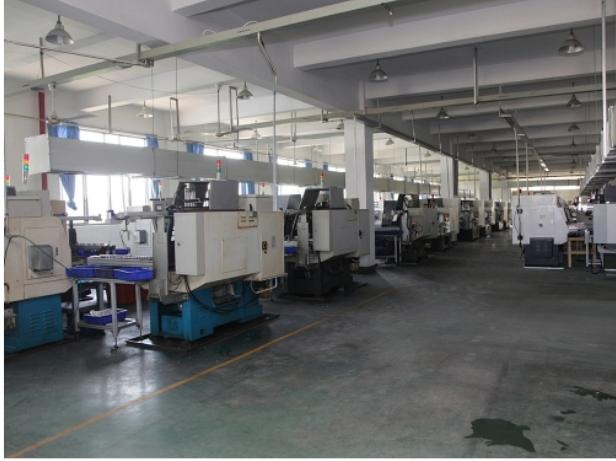
One example is an ISO 9001:2015 certified CNC manufacturing partner, Chiheng Hardware, which serves customers across multiple industrial sectors through precision machining and custom component manufacturing. Rather than competing solely on production cost, companies following this approach emphasize standardized quality systems, documented production processes, and the ability to support long-term international supply chain collaboration.
The broader significance extends beyond any individual manufacturer. As procurement organizations place greater emphasis on risk management, supplier qualification increasingly depends on measurable operational capabilities rather than pricing alone. Manufacturers that invest in certification, process consistency, and production transparency are generally better positioned to participate in global industrial supply chains.
Looking Ahead
Global manufacturing is entering an era where resilience, quality assurance, and supplier credibility carry greater strategic importance than ever before. As companies continue diversifying sourcing networks, certified manufacturing partners are likely to play an increasingly significant role in reducing operational risk while supporting stable international production.
For organizations evaluating overseas suppliers, success will depend less on identifying the lowest-cost option and more on selecting partners capable of delivering consistent quality, transparent operations, and long-term manufacturing reliability. In that environment, certification and professional manufacturing systems are becoming competitive advantages that extend well beyond compliance requirements.
Media info
Person name: Ariel Yang
Organization: Chiheng Hardware Co., Ltd.
Website: https://chihenghardware.com
Email: sales04@chihenghardware.com
SOURCE: Chiheng Hardware Co., Ltd.
View the original press release on ACCESS Newswire


