
Key Takeaways
- Hair growth serums target follicles to encourage new growth, while scalp treatment oils nourish and protect the strands already on the head, and combining both often covers more ground than either alone
- Declining estrogen during menopause shrinks hair follicles and shortens the active growth phase, which is why so many women notice thinning around the part line
- Ingredients like rosemary extract, peptides, and minoxidil support follicle stimulation, while coconut, argan, and pumpkin seed oils focus on strand strength and moisture
- Most serums need roughly 8 to 12 weeks of steady use before any real change in shedding or density shows up, so patience matters more than switching products
- One marine-based system has reported a 32% increase in terminal hairs after three months, a figure worth understanding before comparing treatment options
Menopause has a way of rewriting the rules for hair almost overnight, turning a glance in the mirror into a moment of real concern. Figuring out whether a hair growth serum, a scalp treatment oil, or a combination of both fits a specific situation can feel overwhelming given how many products promise the same results. Breaking down what each product actually does, and why menopausal hair behaves the way it does, makes the decision a lot more manageable.
“Understanding the difference between hair thinning and hair breakage is an important first step. Women need clear information about what each product is designed to do so they can make decisions that suit their individual needs,” says Amin Sheybani, founder and CEO of Vivandi, a hair and scalp care company.
Why Menopause Causes Hair Shedding
Hormones run the show for hair, and menopause throws that system off balance in ways that show up fast. As estrogen levels decline, hair follicles spend less time in active growth and more time resting or shedding, which explains why so many women suddenly notice thinning around the part line or a fuller brush after washing. Around 50 percent of postmenopausal women between the ages of 50 and 65 experience some degree of hair thinning or loss, and up to 60 percent of menopausal women report noticing it as well.
This hormonal shift does more than slow growth. Declining estrogen and progesterone shorten the hair’s natural growth phase while also shrinking individual follicles, producing strands that look thinner even before shedding noticeably increases. The scalp itself changes too, with reduced circulation and slower cell turnover leaving follicles undernourished, while drier skin and brittle hair fibers become more prone to breakage. A closer look at how follicle slowdown and strand damage show up together, and which product addresses which concern, can help clarify where to start.
Serums vs Oils: Key Differences
Hair growth serums and scalp treatment oils might look similar sitting side by side in a bathroom cabinet, since both get applied directly to the scalp and both promise healthier hair. The real difference comes down to where each product actually works and what specific problem it solves.
How Serums Stimulate Follicles
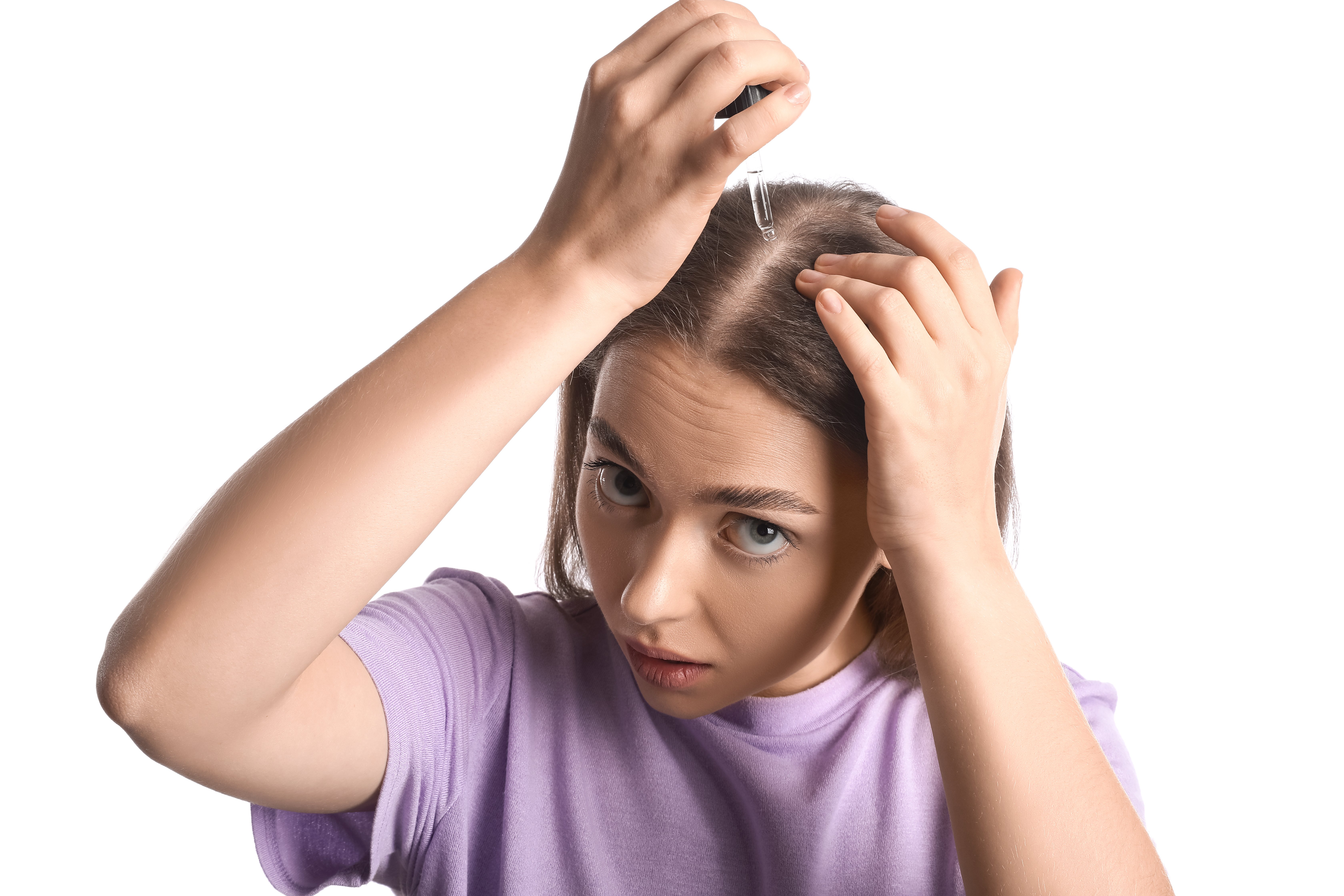
Hair growth serums are lightweight, leave-in treatments built to penetrate the scalp and deliver active ingredients straight to the follicle. Their main job is waking up follicles that have slipped into a resting phase, nudging them back toward active growth. Many formulas also address scalp conditions like irritation or excess oil production that can interfere with healthy follicle function, creating a more welcoming environment for new hair to take hold over time.
How Oils Protect Hair Strands
Scalp treatment oils take a different path, focusing on conditioning and protecting hair that already exists rather than triggering new growth. Instead of penetrating deep into the scalp, oils coat and saturate the hair shaft, sealing in moisture and cutting down on the friction that leads to breakage. Menopausal hair tends to turn drier and more brittle as oil production naturally slows, which makes this protective layer especially valuable for holding on to length and shine that might otherwise snap off.
Ingredients That Actually Work
Reading an ingredient label closely tells a far more useful story than any marketing claim on the front of the bottle. Knowing which compounds target follicles and which ones protect strands turns label-reading into a genuinely useful skill.
Follicle-Focused: Minoxidil, Rosemary, Peptides
Minoxidil remains the only topical treatment approved by the FDA specifically for female pattern hair loss, working by increasing blood flow to the scalp and extending the hair follicle’s growth phase. Rosemary extract has also drawn attention as a natural alternative, with some research suggesting it performs comparably to a 2% minoxidil solution for supporting scalp circulation while delivering antioxidant protection to follicles.
A few other ingredients show up consistently in serums formulated for menopausal thinning:
- Peptides, which support the structural proteins follicles need to build strong new hair
- Saw palmetto, a natural DHT blocker that may help slow androgen-related thinning
- Niacinamide (vitamin B3), which supports scalp circulation and barrier health
- Caffeine and biotin, both commonly included to support follicle activity and hair structure
Strand-Focused: Coconut, Argan, Pumpkin Seed
Oils built for strand protection rely on a different set of ingredients, selected for how well they coat and repair the hair fiber rather than how deeply they reach into the skin. Coconut oil is valued for its fatty acid content, which allows it to penetrate the hair shaft itself and reduce the protein loss that leads to dryness and snapping. Argan oil contributes a rich supply of antioxidants, vitamin E, and essential fatty acids that smooth the cuticle and shield strands from everyday damage like heat styling or brushing.
Pumpkin seed oil deserves special mention for menopausal hair care, since it carries plant sterols that help support balanced DHT activity around the follicle, which can be particularly useful for the androgen-related thinning that often shows up during this life stage. Jojoba oil has a composition similar to human sebum, which allows it to help balance oil production, prevent dryness, and support healthy roots, while also strengthening hair and reducing breakage.
What the Evidence Shows
Patience plays a bigger role in hair recovery than most people expect, and understanding realistic timelines helps set expectations before frustration sets in.
Timelines for Visible Results
Most scalp serums require consistent application for at least 8 to 12 weeks before any visible change in shedding or density shows up, simply because hair growth cycles don’t move faster than that regardless of formula strength. This timeline holds true across most follicle-focused treatments, which is why switching products every few weeks tends to backfire. Giving a single formula a full growth cycle to work remains one of the more reliable ways to judge whether it’s actually making a difference.
Stronger Outcomes from Combined Systems
Systems that pair multiple product types often report stronger results than single treatments used alone. Viviscal Pro, a marine-based system that combines an oral supplement with topical support, has shown a 32% increase in terminal hairs after three months of consistent use. These results reflect what happens when a treatment is built around the natural growth cycle rather than promising instant change, which reinforces why realistic timelines matter more than dramatic before-and-after photos.
Choosing or Combining Both
Deciding between a serum and an oil usually comes down to identifying which symptom feels most pressing. Some women notice visible scalp thinning first, while others deal mainly with dry, breaking ends, and either scenario points toward a clear starting product.
When Thinning Is the Main Concern
When a wider part, visible scalp, or noticeably reduced density is the main worry, a follicle-focused serum deserves top priority. Formulas containing minoxidil, rosemary extract, or peptides work best applied daily to a clean, dry scalp, with results judged only after a couple of months of steady use. Thinning driven by hormonal shifts responds best to sustained, consistent application rather than occasional touch-ups.
When Breakage Dominates
When the bigger issue is brittle strands, split ends, or hair that breaks before it ever gets the chance to grow longer, a scalp treatment oil deserves the spotlight instead. Oils rich in coconut, argan, or pumpkin seed work best applied to the mid-lengths and ends, ideally before washing, to build a protective barrier against heat and daily mechanical stress. This approach won’t speed up new growth, but it protects the length already achieved so progress from a growth serum doesn’t get undone by everyday breakage.
Building a Dual Routine
Many women find the most complete results come from pairing both product types rather than choosing one over the other, since applying oil first can create a barrier that reduces how well a serum absorbs into the scalp. A practical routine might look like this:
- Apply a hair oil to the mid-lengths and ends before shampooing, letting it sit for at least thirty minutes to nourish and protect the strand.
- Wash and gently towel-dry the hair.
- Apply a hair growth serum directly to the scalp, focusing on areas where thinning shows up most.
Repeating this pattern several times a week, with oil frequency adjusted based on how dry or oily the scalp tends to run, treats the follicle and the strand as two separate but connected problems. That mirrors how menopausal hair actually behaves, and consulting a specialist can help fine-tune ingredient choices and application frequency based on individual scalp needs.
Serums Target Roots, Oils Protect Length
The simplest way to remember the distinction is this: serums work at the root, and oils work along the length. Menopausal hair shedding rarely comes from a single cause, which is exactly why relying on just one product type often falls short of expectations. Pairing a follicle-stimulating serum with a strand-protecting oil addresses both the hormonal shift happening at the scalp and the physical wear happening along the hair shaft, giving thinning and breakage separate but complementary solutions.
Women comparing treatment options for menopausal hair changes can explore Vivandi’s guide to hair growth serums and scalp treatment oils for further information on ingredients, product differences, and considerations when building a hair care routine.
Vivandi Inc.
info@vivandiinc.com
+1 310 999 2876
27481 Monforte
Mission Viejo
CA
92692
United States


