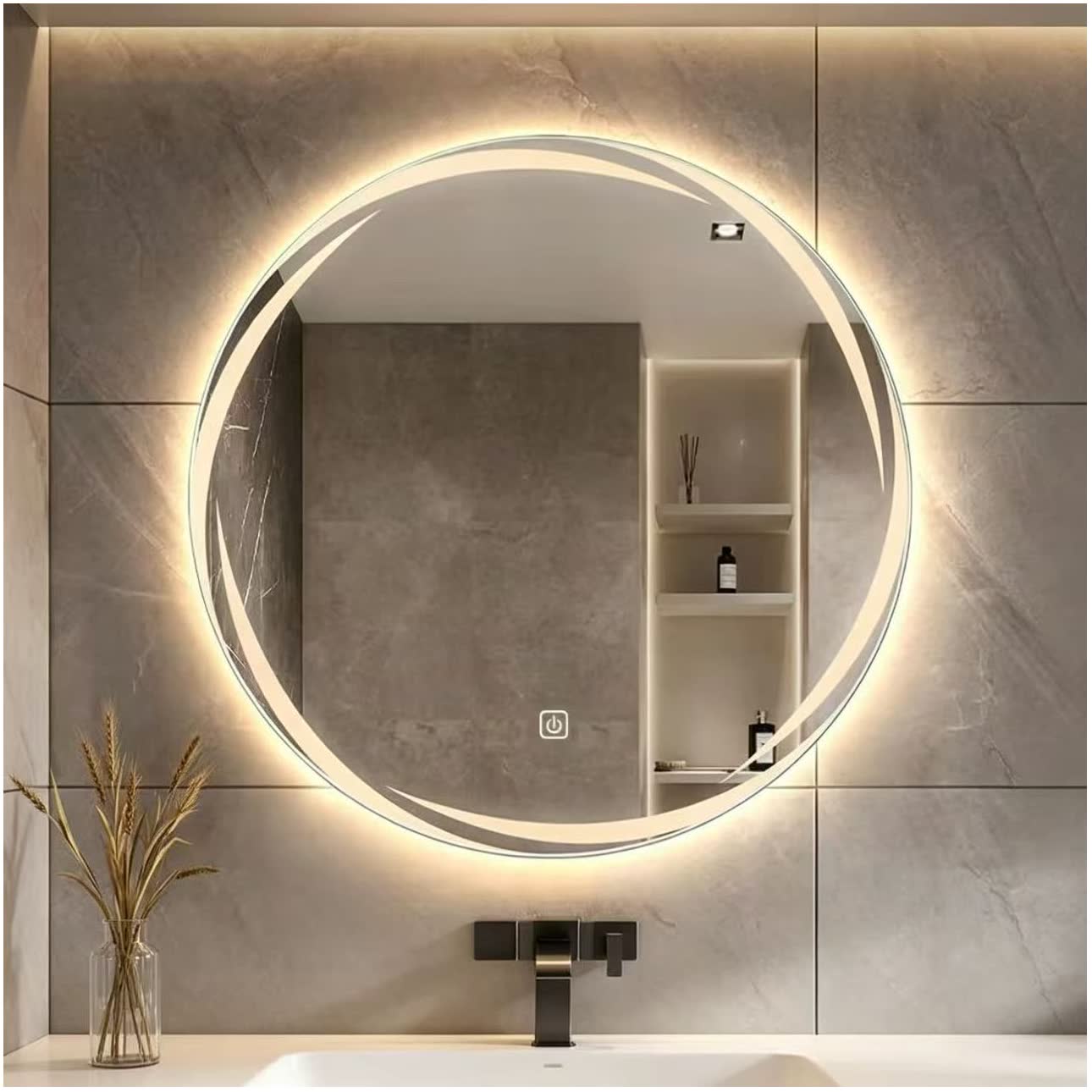
YIWU, ZHEJIANG, CHINA, October 26, 2026 /EINPresswire.com/ — Developing marketable bathroom mirror collections requires translating architectural interior trends into scalable factory production lines without compromising structural glass integrity. Commercial buyers and hospitality specifiers collaborating with a Leading Bathroom Mirror Factory prioritize in-house industrial design, precision glass edging, and flexible dimensional scaling. At JIEPAI HOME, dedicated product development engineers transform custom concepts into volume-manufactured collections. In-house design capabilities encompass parametric CAD modeling, precision glass beveling, and architectural frame extrusion engineering. Sourcing teams gain the agility to introduce bespoke mirror programs that satisfy regional aesthetic preferences while maintaining rigorous structural durability. Partnering with a dedicated manufacturer ensures smooth transitions from initial conceptual renderings to fully packaged export containers.
How a Bathroom Mirror Factory Turns Buyer Requirements into Product Collections
Developing a structured commercial mirror catalog requires translating creative architectural briefs into SolidWorks 3D parametric models and precision CNC glass fabrication sequences. Engineered with 6063-T5 aluminum extrusions and tested under ASTM B117 salt spray protocols, factory design workflows balance aesthetic silhouettes with mechanical durability. Retail buyers and hospitality designers provide room elevation sketches, target retail price points, and regional building standards. Parametric modeling accounts for glass thermal expansion coefficients across seasonal storage temperatures. Industrial designers evaluate frame wall thickness down to 1.2 mm to achieve minimum material weight without sacrificing torsional perimeter stiffness.
At JIEPAI HOME, style development balances visual proportions with mechanical rigidity. Design engineers analyze trade exhibition trends from Milan and Frankfurt, adapting organic curves and minimalist metal borders for cost-efficient mass production. Multi-axis CNC glass edging centers grind precision bevels and polished pencil edges, relieving edge stress and eliminating micro-fractures that trigger glass failure under thermal expansion. Finite element structural models verify that frame extrusions resist torsional twisting when mounted on uneven tile surfaces.
Shape and Size Create the Foundation of a Bathroom Mirror Range
Geometric silhouette and physical dimensions establish the visual foundation of any mirror collection. Assortment managers require balanced geometric options to match single and double vanity widths across residential developments and luxury hospitality suites. Industrial design teams calibrate aspect ratios so that mirror heights visually align with standard 2.4-meter ceiling elevations.
Round Mirrors Provide Soft Geometric Contours
Circular mirrors soften rigid vertical lines in tiled bathrooms, introducing organic balance above vanity counters. JIEPAI HOME standardizes round mirror production across four primary diameter tiers: 50 cm, 60 cm, 70 cm, and 80 cm. This proportional progression allows buyers to specify 50 cm formats for compact powder rooms or 80 cm units for expansive master bathrooms. It preserves uniform aesthetic branding across commercial property portfolios.
Rectangular and Square Mirrors Create Linear Product Collections
Rectangular and square mirrors offer an architectural profile suited for contemporary multi-family developments and hotel bathrooms. Standard production dimensions include 50×70 cm, 60×80 cm, 70×90 cm, 75×100 cm, 75×120 cm, and 80×130 cm formats. Multi-axis CNC shaping centers produce 15 mm, 20 mm, and 25 mm decorative beveling profiles, polished with cerium oxide wheels to achieve clear light refraction along glass perimeters. CNC diamond wheels grind glass edges with progressive grit stages from 120 mesh rough shaping down to 400 mesh fine grinding. This multi-stage grinding sequence prevents micro-chipping along the edge profile, preparing the perimeter for optical polishing.
High-temperature ceramic frit silk-screen borders are baked onto the glass perimeter at 680 degrees Celsius. This vitreous enamel fuses permanently into the glass surface, resisting cleaning chemicals and humid bathroom atmospheres. Factory glass lines utilize copper-free silver mirror glass passivated with a dual-layer waterproof backing paint. This formulation prevents perimeter edge desilvering when mirrors operate in humid environments exceeding 85% relative humidity. To maintain reflective clarity, commercial cleaning crews should avoid spraying ammoniated glass detergents directly onto raw perimeter edges.
Feature Configuration Adds Another Layer to Style Development
Frame engineering enhances geometric aesthetics while providing structural perimeter protection. Sourcing managers can specify extruded 6063-T5 aluminum alloy frames with architectural anodized finishes in brushed champagne, rose gold, and matte graphite. Die-cast corner brackets with hidden set screws maintain rigid 45-degree miter seams without visible exterior fasteners. Anodized coatings undergo sealed nickel acetate bath treatments, producing an impermeable oxide layer that resists high-humidity tarnishing. Spectrophotometers measure color consistency against international Pantone swatches, ensuring that frame tones match commercial bathroom hardware suites.
Factory style development incorporates structural backframes that support multiple hanging orientations. Reversible mounting channels allow contractors to install rectangular mirrors vertically or horizontally to match varied vanity widths, simplifying on-site trade installation across multi-unit hotel developments. Internal mounting backframes utilize pre-punched slotted holes that allow installers to adjust horizontal alignment by up to twenty millimeters. This mechanical adjustment compensates for uneven on-site wall anchors, speeding up guestroom installations across multi-story hotel projects.
Model Selection and Customization Connect Design with Sourcing
Bridging creative styling with commercial procurement requires adaptable manufacturing agreements. Direct factory collaboration allows brand developers to modify baseline dimensions and apply custom private-label branding. Factory toolmakers construct custom extrusion dies for bespoke frame silhouettes within twenty business days. Sourcing clients can test physical prototype frame corners before committing to high-volume commercial production runs.
JIEPAI HOME facilitates market testing with low minimum order quantities starting at 2 pieces on select catalog references. Customization services include laser-etched brand trademarks on lower mirror corners, custom color-matched metal trims, and reinforced retail gift packaging. Design engineers generate 3D rendering packages within 48 hours to accelerate client executive approvals.
Frequently Asked Questions about Bathroom Mirror Style Development
Which Mirror Shapes Are Represented in JIEPAI HOME’s Current Smart-Mirror Examples?
Current production includes circular models for organic, balanced interiors and rectilinear formats for structured vanity alignments across multiple commercial size tiers.
What Size Options Are Available for the Round Smart Mirror?
Round models are manufactured in standard 50 cm, 60 cm, 70 cm, and 80 cm diameter configurations to accommodate varying room scales.
Can Style Development Include Smart Functions?
Yes. Style development integrates LED illumination ribbons, electric defogging heating pads, and single or multi-touch capacitive control interfaces.
How Does Customization Fit the Development Process?
Customization encompasses metal frame alloy finishes, dimensional scaling, private-label branding, customized wiring harnesses, and reinforced protective packaging.
What Should a Private-Label Buyer Send Before Requesting Mirror Options?
Buyers should provide target outer dimensions, geometric shape, required electronic functions (lighting, defogging, touch switch), order quantities, and packaging requirements.
Build the Next Bathroom Mirror Range with JIEPAI HOME
Commercial mirror success depends on unifying industrial design, precision CNC glass fabrication, and reliable frame engineering during early development. Thorough design verification before mass production ensures consistent visual quality across wholesale shipments.
Brand developers and hospitality specifiers can present custom aesthetic concepts through the JIEPAI HOME storefront to evaluate digital design lookbooks, CNC bevel profile samples, and tooling schedules.
JIEPAI HOME
JIEPAI HOME
Legal Disclaimer:
EIN Presswire provides this news content “as is” without warranty of any kind. We do not accept any responsibility or liability
for the accuracy, content, images, videos, licenses, completeness, legality, or reliability of the information contained in this
article. If you have any complaints or copyright issues related to this article, kindly contact the author above.

Media gallery